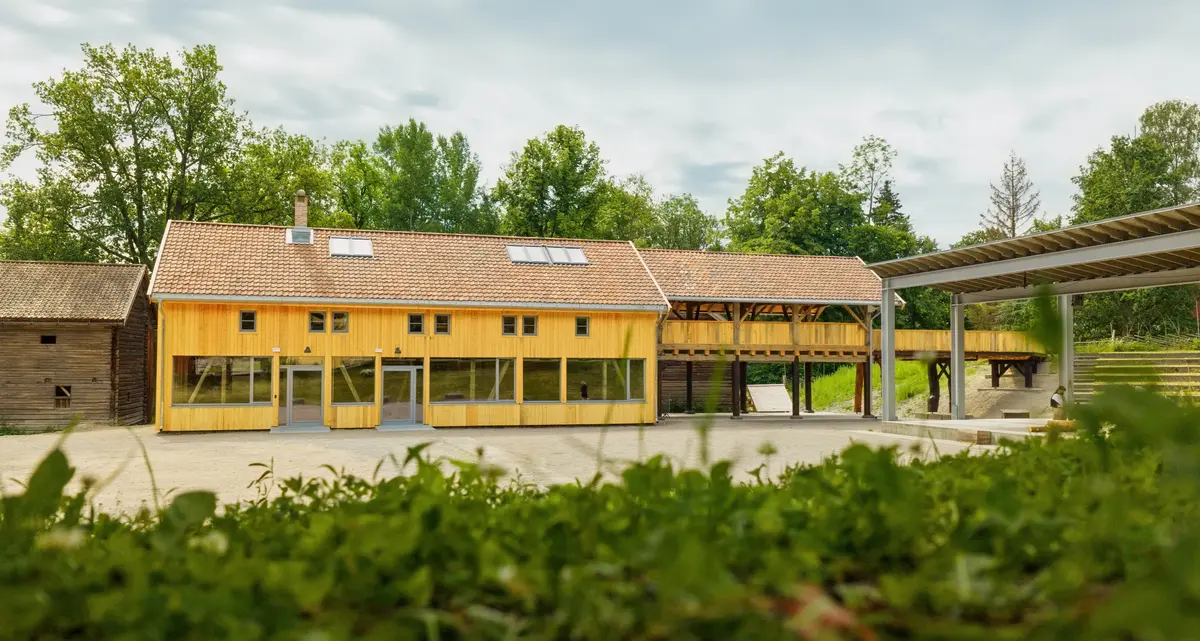
This new workshop will be used by the museum’s heritage craftsmen and educators in their daily work. Here, you can watch and perhaps even join them in splitting roof shingles, mixing paint, or planing ceiling boards. The new building is a flagship project and an innovation pilot designed to contribute to the future of sustainable construction, and is well worth a closer look in its own right.
- 1/1
Stian Nybru
From a run-down barn to a sustainable workshop
The new building is not a replica of a structure from the past. It has been designed from the ground up, based on the craftsmen's knowledge and available materials.
A large portion of the timber has been repurposed from a 130-year-old barn from Nedre Sem in Asker. Sturdy wooden beams from the barn have now become part of the framework, and remnants of the beams have been used as cordwood ("kubb") in the walls, combined with clay sourced directly from the site.
Other materials include trees felled at the neighboring construction site of the new Museum of the Viking Age. The rest was harvested from Sørmarka and Nordmarka, partly near Ullevålseter and Sognsvann. The timber was extracted through selective logging to ensure the highest possible quality, and hauled out by horse to protect the root systems of the remaining trees.
The project is unique because it is primarily built using traditional construction methods, with minimal use of plastic, and a strong focus on sustainable solutions and circularity. Simple, high-quality solutions have been utilized, ensuring an expected lifespan of at least 200 years, as everything that has been built can be repaired.
Moving forward with the past
The building crafts conservators at Norsk Folkemuseum view themselves as care workers. They carefully look after old buildings and their surroundings, but they also care deeply about preserving vital knowledge.
The new building is an innovation project named TradLab Wood (short for a laboratory with, about, and for traditional woodwork). The building itself is an integral part of the museum’s storytelling around traditional crafts, serving as a full-scale experiment that can help answer some of the most important questions of our time regarding resource use, climate, and building traditions.
A learning arena that challenges
TradLab Wood aims to boost interest in vocational subjects and traditional crafts.
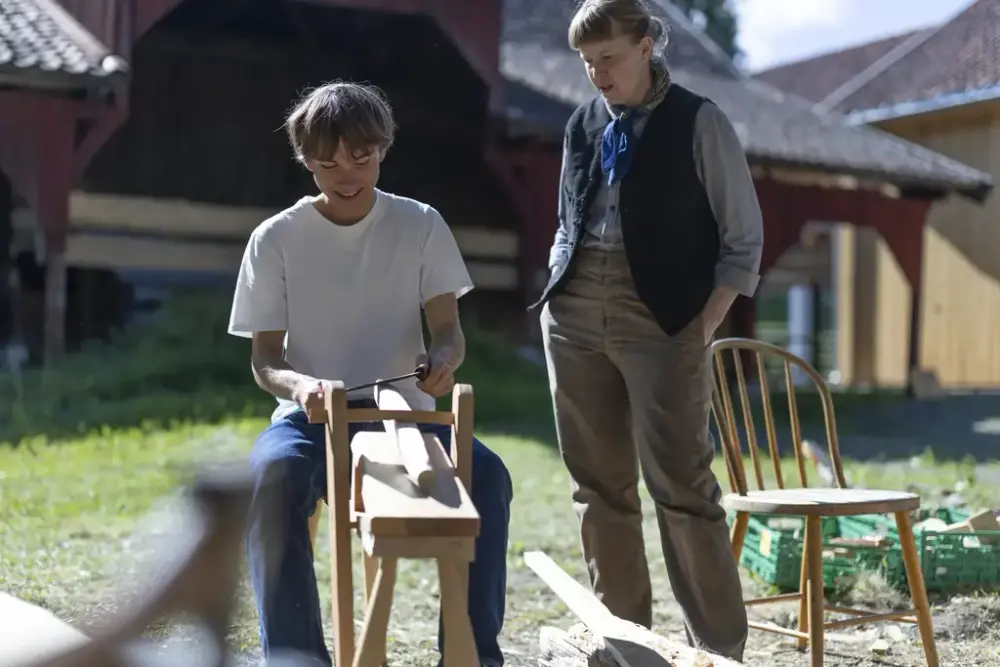
In the "whittling workshop" (spikkoteket), students are invited to learn about timber and the knife as a working tool. Through practical work, students get to explore materials, develop hands-on skills, and experience a sense of achievement and the joy of creation.
Vocational students will use the building as a bench workshop, while university students will explore and reflect on how traditional building crafts can challenge today’s established methods and the systems currently taught in higher education for construction.
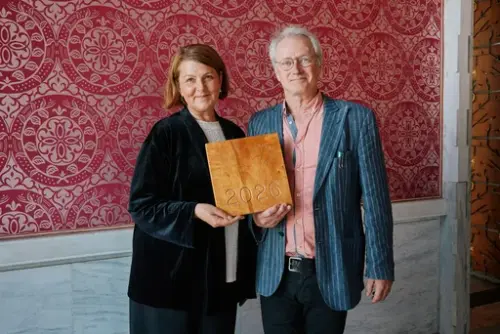
TradLab Wood will become a gathering place for innovation and knowledge-sharing around traditional crafts. The new building has been awarded the FutureBuilt plaque as an inspiring example of how traditional architecture, reuse, and natural materials can be united in an ambitious and forward-looking construction project.
Created with great partners
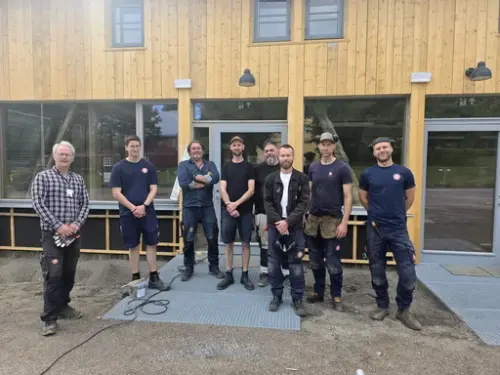
TradLab Wood is primarily funded by the Savings Bank Foundation DNB (Sparebankstiftelsen DNB), with additional contributions from Enova and Norwegian University of Science and Technology. The project has involved close collaboration with a wide range of partners, including the City of Oslo, Sirktre, the Norwegian Institute of Wood Technology (Treteknisk), Omtre, FutureLab, Grån AS, Veidekke, and The Norwegian University of Life Sciences. The contractor Klima og Bygg AS was responsible for all technical infrastructure and the building envelope, while the craftsmen at Norsk Folkemuseum built the traditional, load-bearing structure and the cladding.
Even the children attending the Savings Bank Foundation's "Verdens Kuleste Dag" (The World's Coolest Day) contributed by sawing cordwood. The children who took part signed their logs, and might just find their names on the walls.
Even the children attending the Savings Bank Foundation's "Verdens Kuleste Dag" (The World's Coolest Day) contributed by sawing cordwood ("kubb"). If your child took part, you might just find their name hidden within the walls.
- 1/2
Abrakadabra Studio - 2/2
Norsk Folkemuseum
Facts
- Completed: 2026
Developer: Norsk Folkemuseum
Architect: Olav Vidvei
FutureBuilt innovation pilot
Built with a high degree of reuse and sustainability
Natural materials such as wood, clay, and flax/linen
Workshops and education in traditional crafts
A meeting place for craftsmen, students, and museum guests