Open for pre-booked guided tours throughout the year.
- 1/1
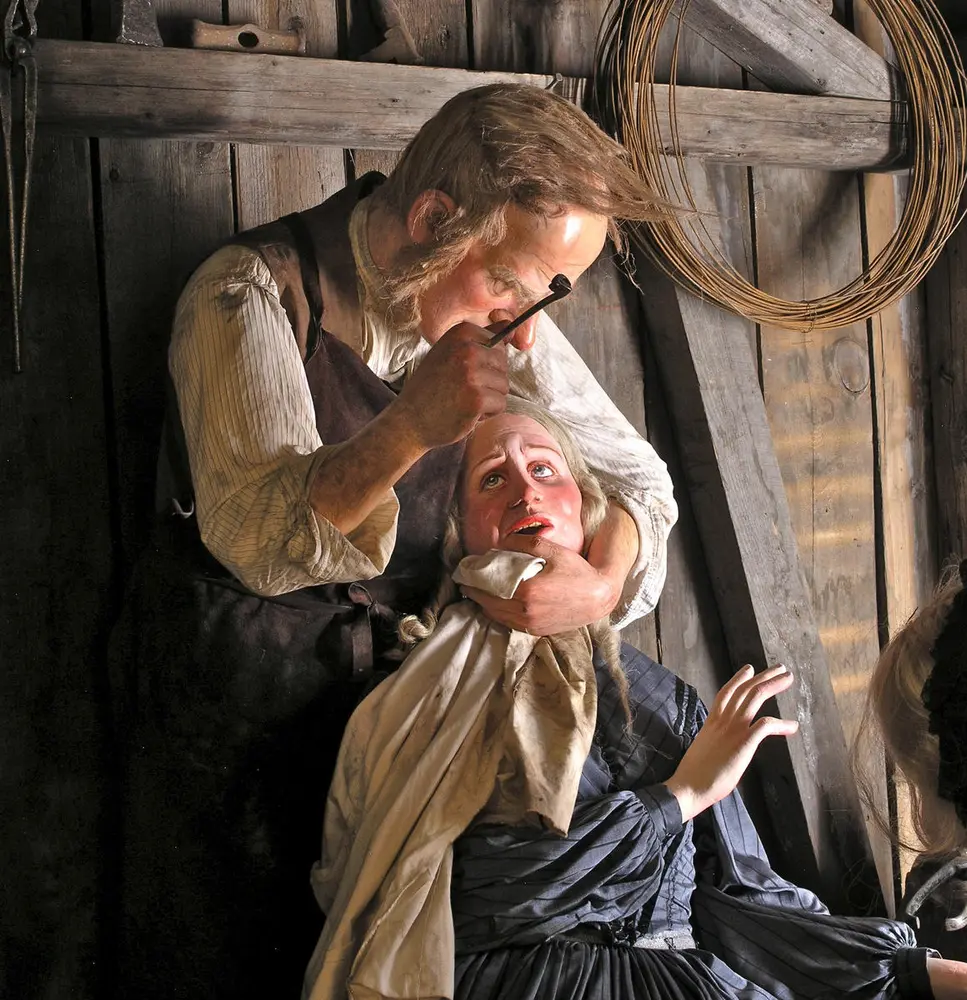
At the end of the 19th century, the blacksmith who pulled teeth with a crude pair of pliers represents “teeth to dread.” The three dental offices from around 1900, 1930, and 1960 show how dentistry gradually became “teeth to enjoy,” with improved equipment, better treatment options, and, not least, prevention of dental diseases.
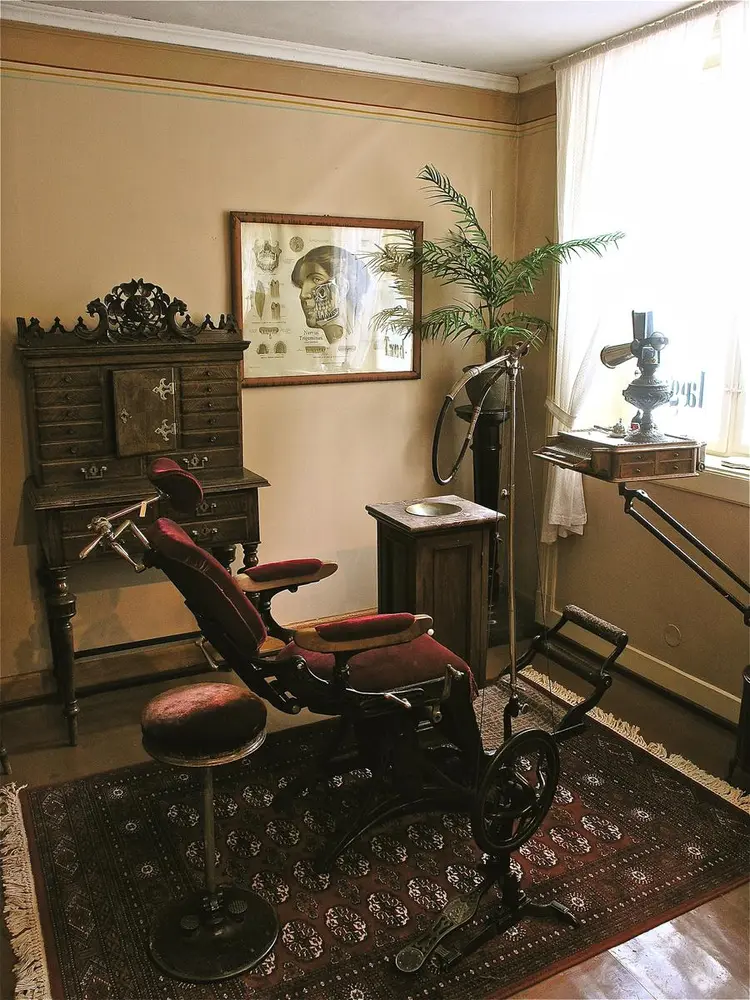
Around 1900, a dental office could be part of the home, furnished with plush chairs, mahogany furniture, and rugs. The dentist used a manual drill and light from a paraffin lamp. By the 1930s, the office had electricity, running water, and an X-ray machine. Around 1960, dentists used high-speed drills with water cooling, and hygiene was better ensured with smooth surfaces and sterilizers for instruments.
Two short films in the exhibition illustrate modern dentistry, highlighting communication between dentist and patient as well as contemporary treatment options.
- 1/1
Tannlegekontoret fra ca. 1900 i bygården fra Fred. Olsens gate 13. Mike Mills | Norsk Folkemuseum
Next to the 1900 dental office is the dental laboratory (“labben”). This placement reflects the historical reality that the laboratory was originally part of the dental office. The dentist—or occasionally the office assistant—produced crowns and dentures on-site.
In 2009, the Oslo Dental Association Museum Committee, in collaboration with dental technicians, gave this section of the exhibition a refresh. Two short films show the development of the dental technician profession and provide information about different types of dental restorations, including crowns, bridges, and implants.